Hardware & Firmware

In addition to working on interaction design and software development, I also develop hardware and firmware. This includes everything from using off-the-shelf components for rapid prototyping to designing custom PCB boards to developing firmware for existing Bluetooth platforms. I have worked on various engagements that required these skills including Pie Tops II for Pizza Hut, health-care startup Inspiren, security company React Mobile, a biometric shopping cart for BCBS and custom MicroPython firmware for the Newlab IoT board which complimented a workshop intensive for GE executives.

Show image descriptions

These image descriptions were written by Claude. I provided my own code, project proposals, and notes as input so the descriptions could explain what you're actually seeing.
Hardware sensor testing on prototyping bench
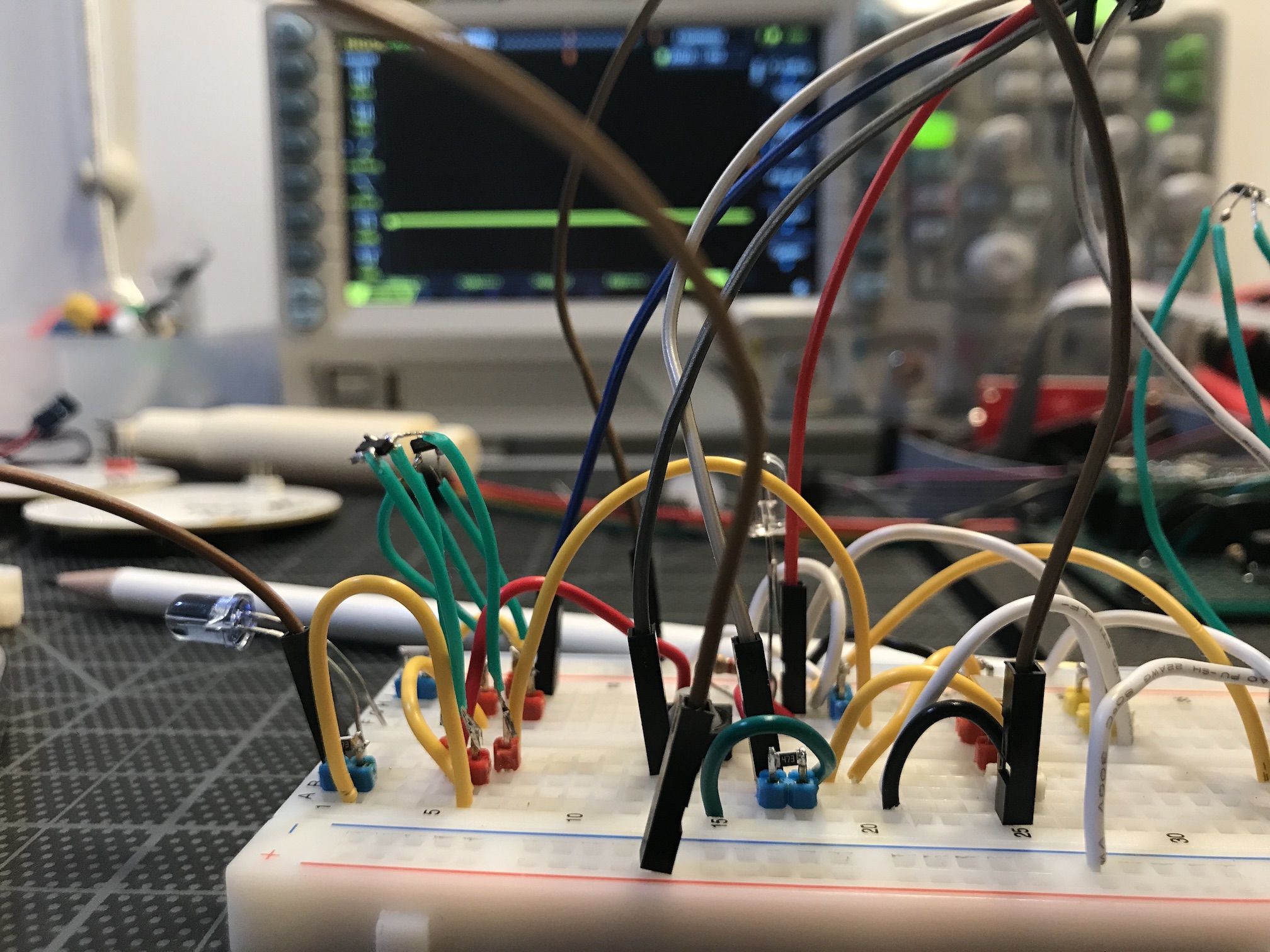
Breadboard prototype with LEDs and sensor components
No items found.

Hardware development in progress: testing sensor integrations and firmware on a prototyping bench. The work here spans off-the-shelf components for rapid prototyping to custom PCB design, Bluetooth firmware development, and manufacturing. Projects have included Inspiren (a multi-sensor healthcare device combining BLE sniffing, thermal arrays, and IR cameras, winner of the SXSW AI/ML Innovation Award), React Mobile (security hardware), and custom MicroPython firmware for the Newlab IoT board.

A breadboard prototype with LEDs, jumper wires, and sensor components. This is the earliest stage of hardware development: wiring up components by hand to test circuits before committing to a PCB layout. The green terminal text on the monitor behind shows firmware being debugged in real time. Most of the projects that eventually became polished products started exactly like this.

Sensor component testing with firmware debug output
Documentation shoot at AoE hardware workshop
Rigol oscilloscope waveform analysis for firmware debugging
Custom red PCB boards on electronics workbench
Late night firmware development at New Lab
Area of Effect workspace at New Lab with multiple screens
No items found.

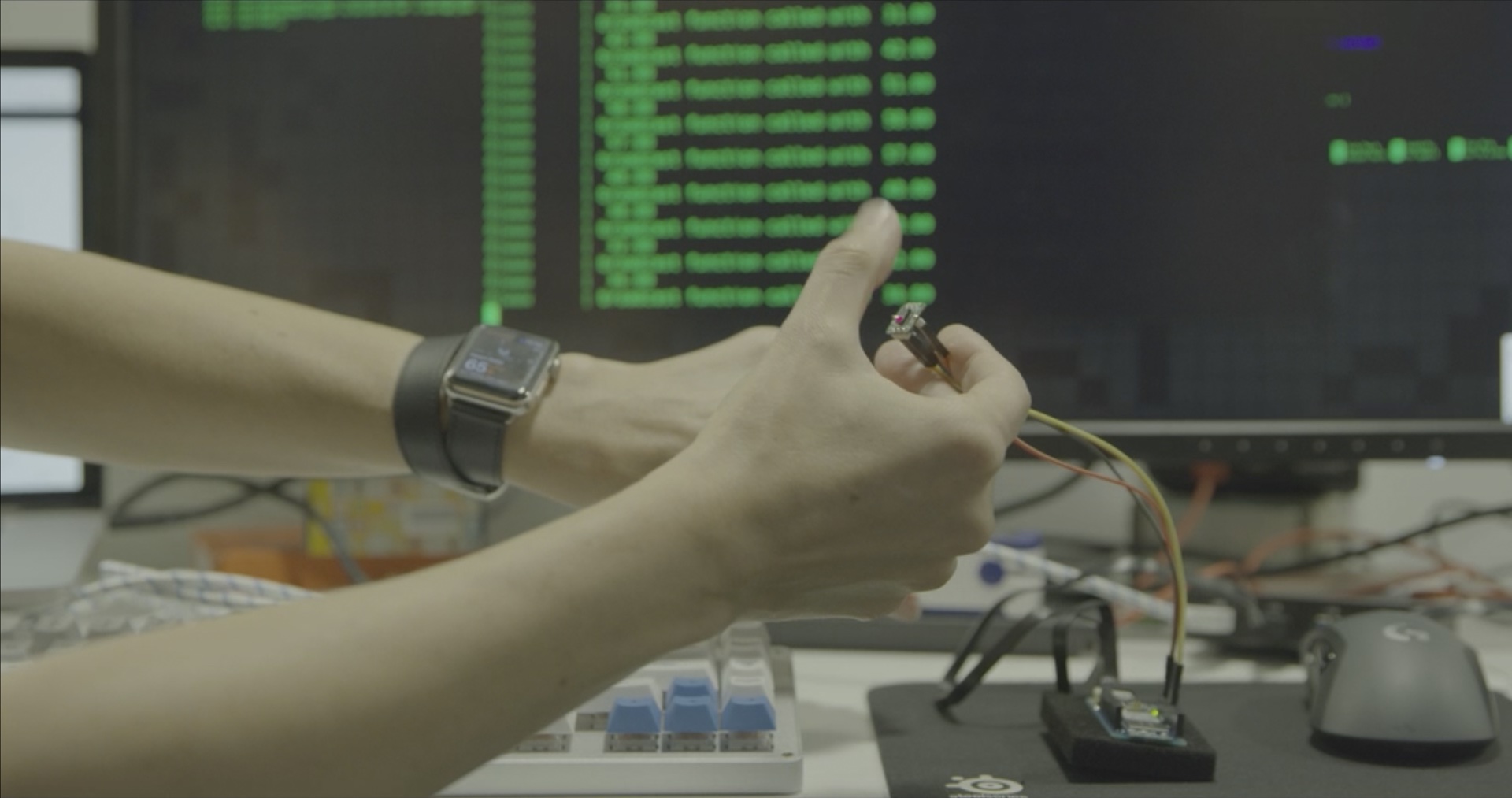
A close-up of a sensor component held between fingers, with wires attached and a terminal window visible on the monitor behind. This is the kind of hands-on testing that happens hundreds of times during hardware development: connecting a sensor, running firmware, checking the output, adjusting, repeating. The digital wristwatch and bare electronics give it an honest workshop feel.

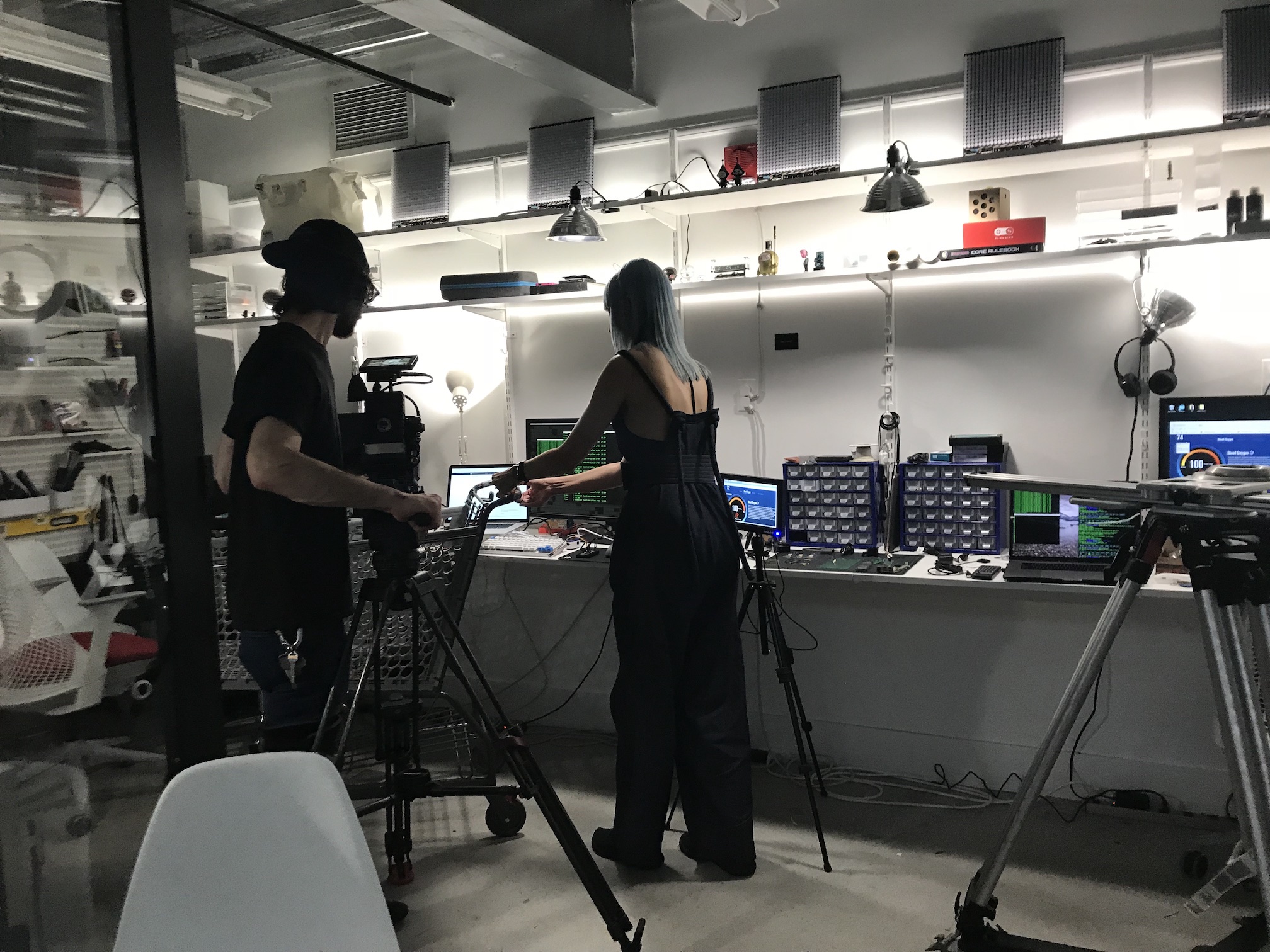
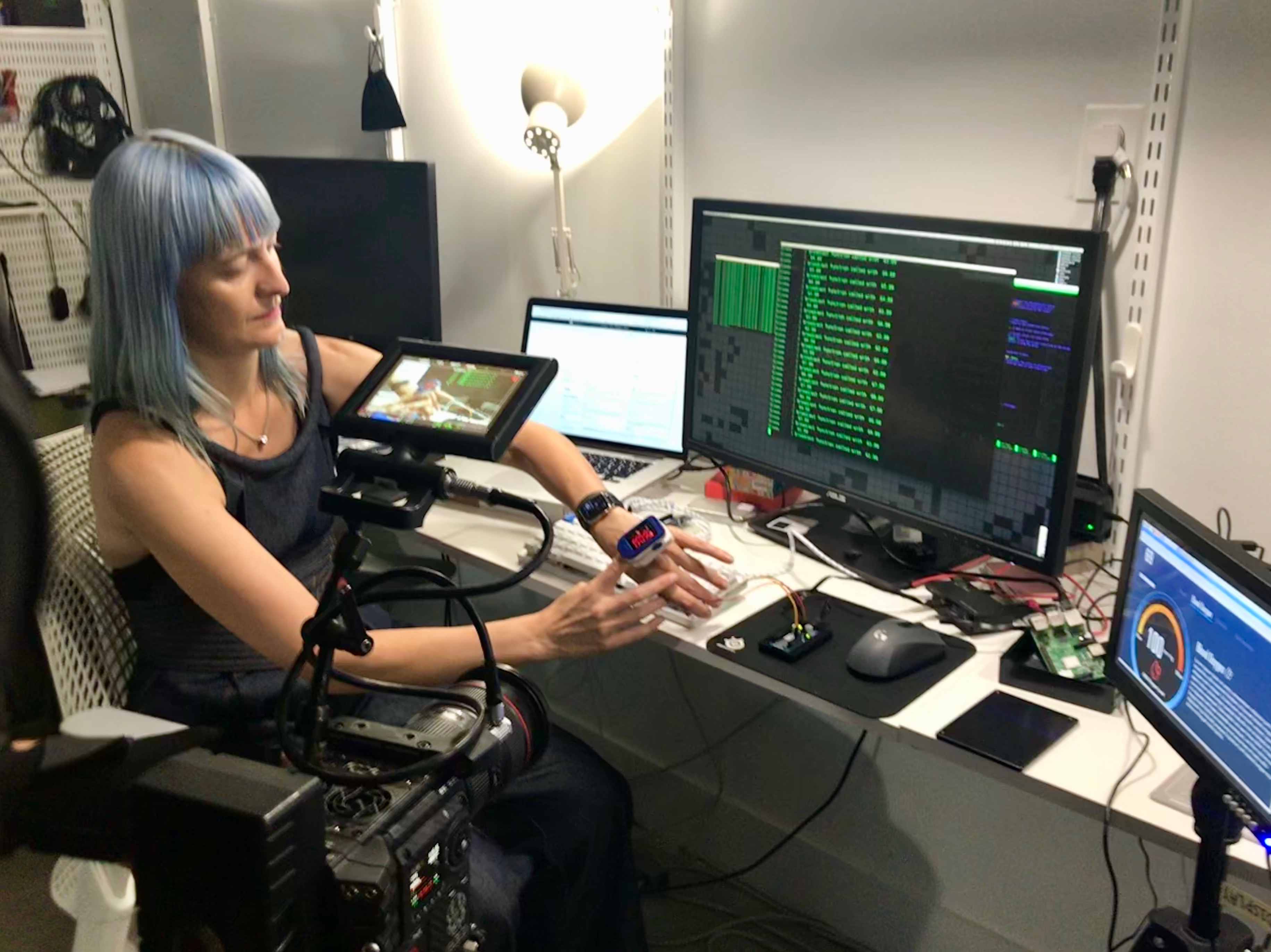
A documentation shoot at the AoE workshop. A camera operator sets up while Carrie works on electronics at the bench. When your work is physical objects and blinking LEDs, documentation requires actual cameras and lighting rigs, not just screenshots. The shelves of component storage bins in the background are the reality of running a hardware practice.

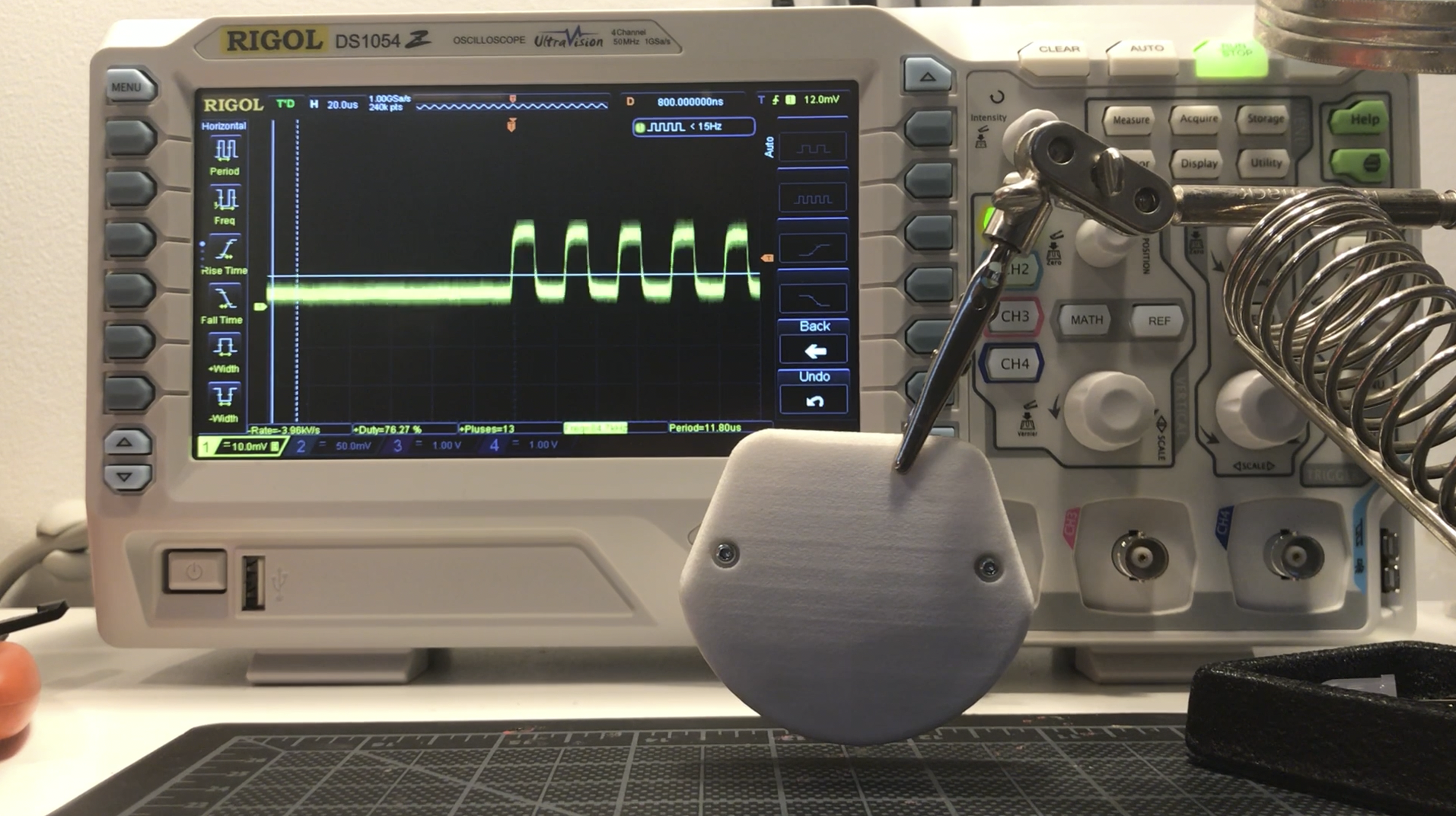
A Rigol DS1054Z oscilloscope displaying a periodic waveform at 3.96MHz with 76.87% duty cycle. Oscilloscopes are essential for firmware development: they let you see what's actually happening on a wire in real time. This kind of signal analysis is how you debug communication protocols, verify timing, and make sure your hardware is doing what your code told it to do.

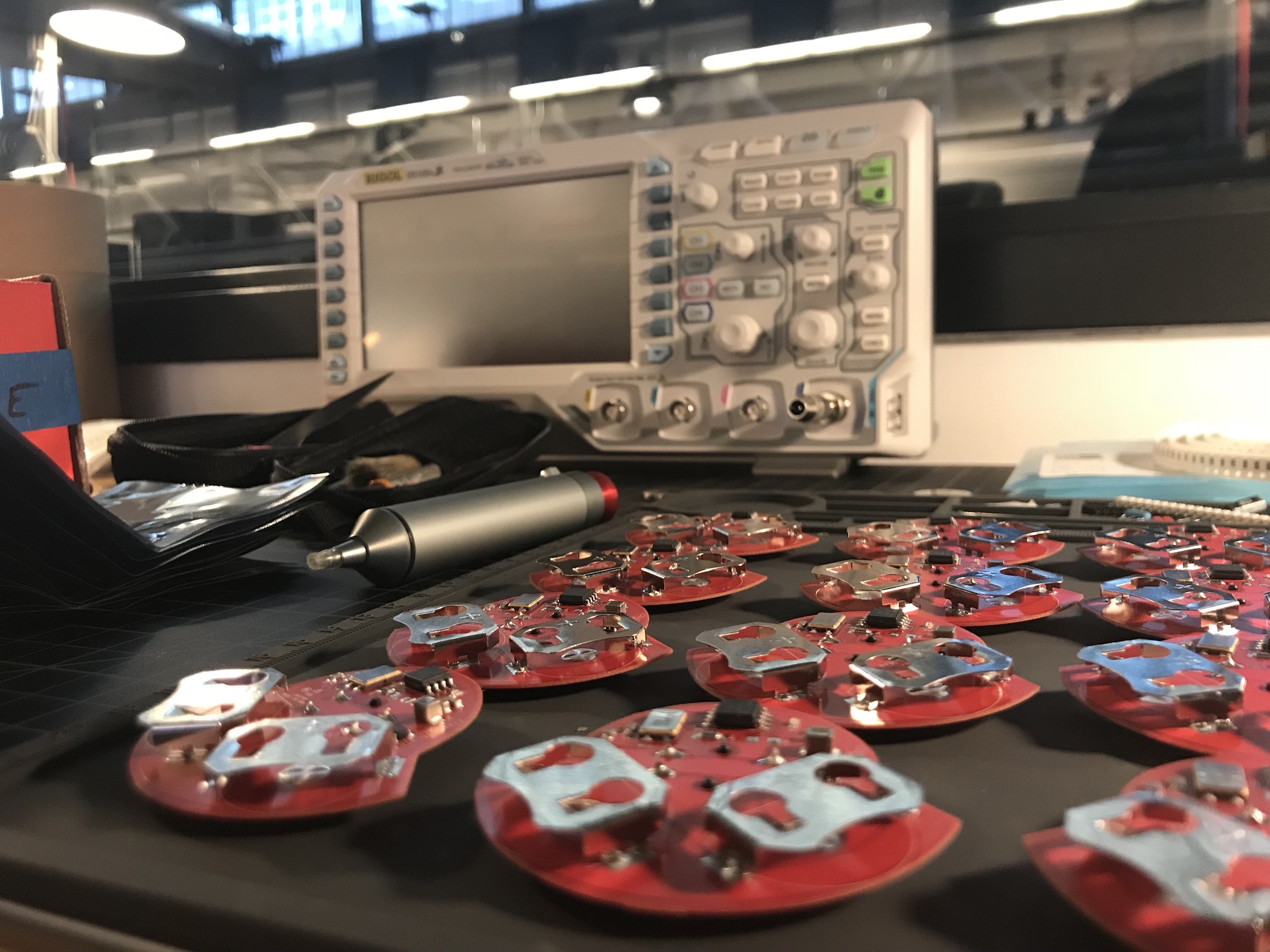
Red PCBs (printed circuit boards) laid out on a workbench next to a soldering station. These apple-shaped boards are custom designs with surface-mounted components, metallic connectors, and circuit pathways. The jump from breadboard prototype to custom PCB is a significant milestone in any hardware project: it means the design is stable enough to manufacture. The Rigol oscilloscope in the background confirms this is the same workbench from the previous image.

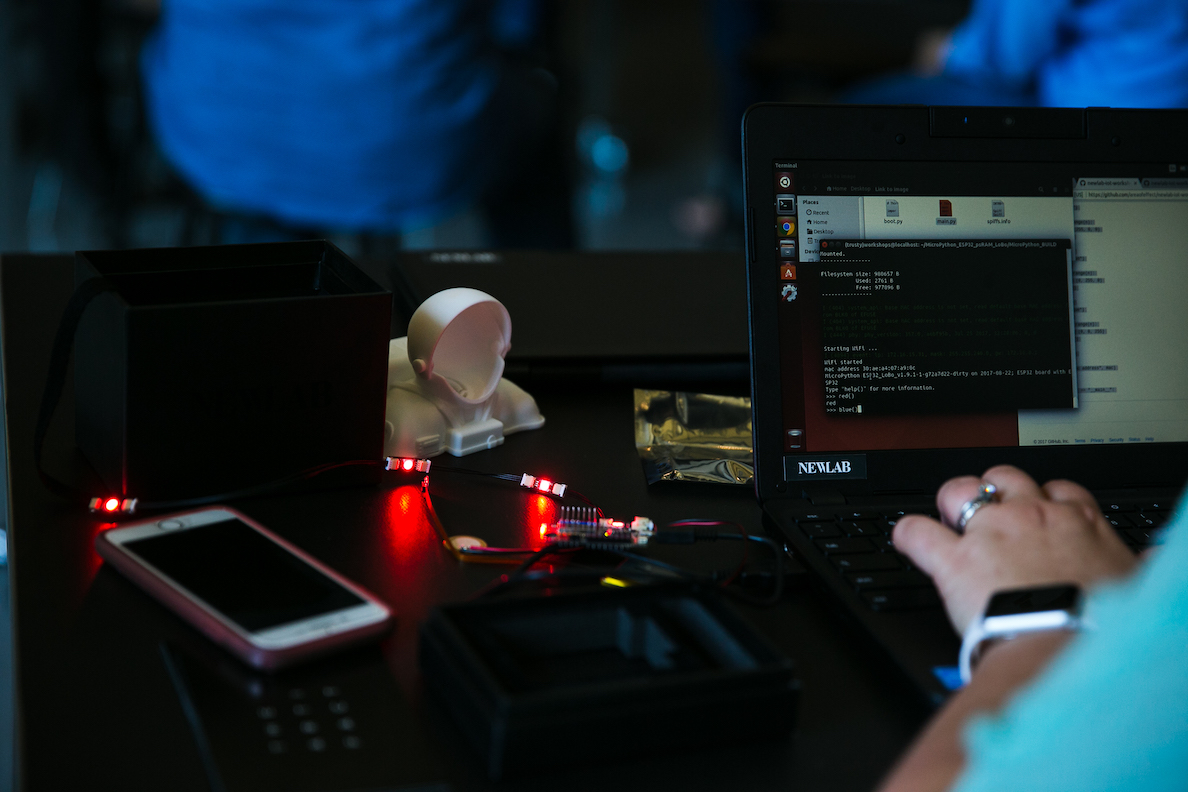
Late-night work at New Lab. A laptop labeled "NEWLAB" shows a terminal window with firmware being debugged, while red LED indicators glow on the hardware being tested. The translucent illuminated figurine on the table is a personal touch in an otherwise technical workspace. A smartphone and power bank sit nearby. This is what firmware development looks like at 11pm: dark room, glowing screens, and the patience to track down a bug one line at a time.

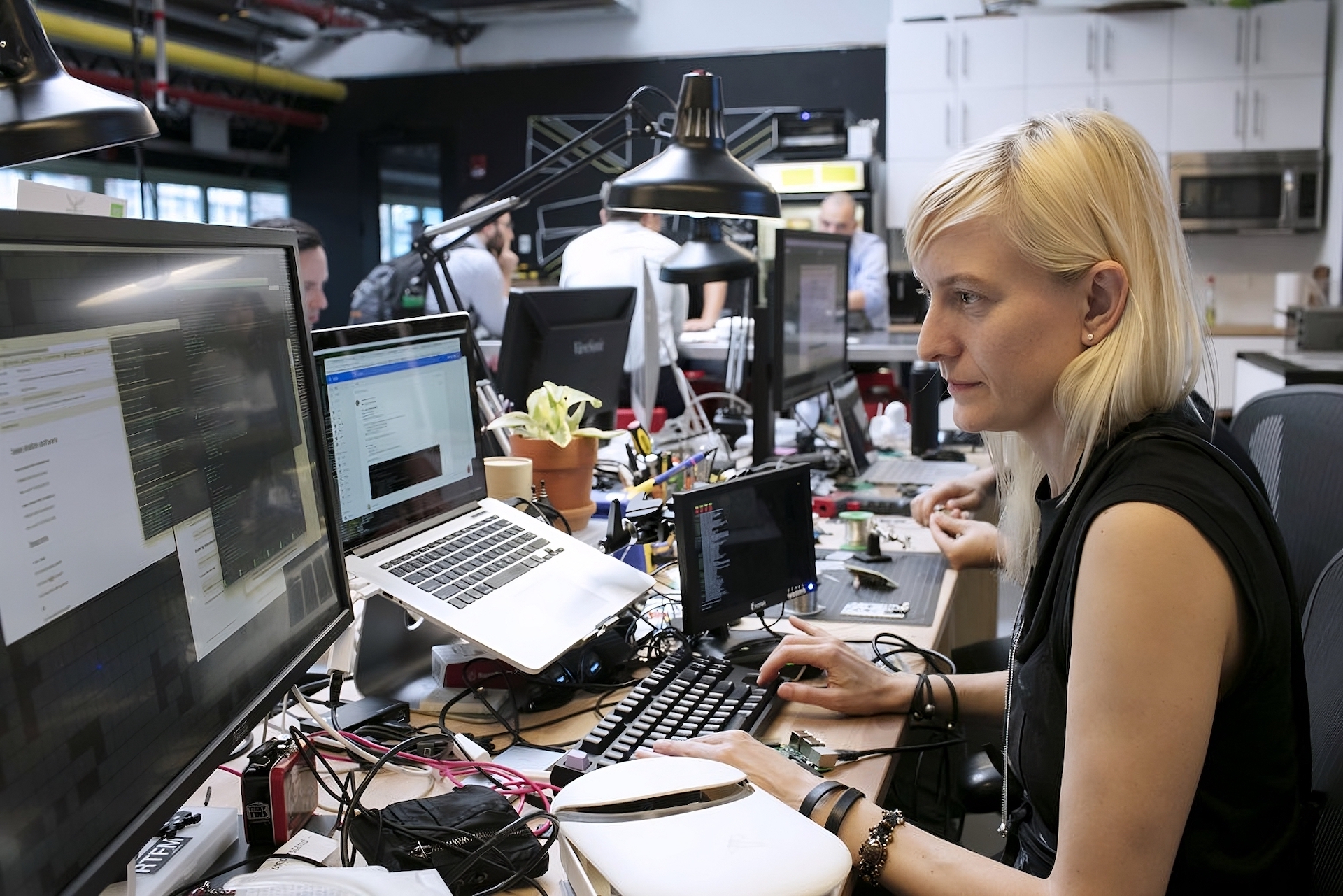
The AoE workspace at New Lab in full swing. Carrie works across multiple screens, with code on one monitor, a hardware interface on another, and electronic components spread across the desk. A potted plant provides a small reminder that humans work here too. The adjustable lamps, cables running everywhere, and stacked equipment are typical of a creative technology practice that's always mid-build on three projects at once.