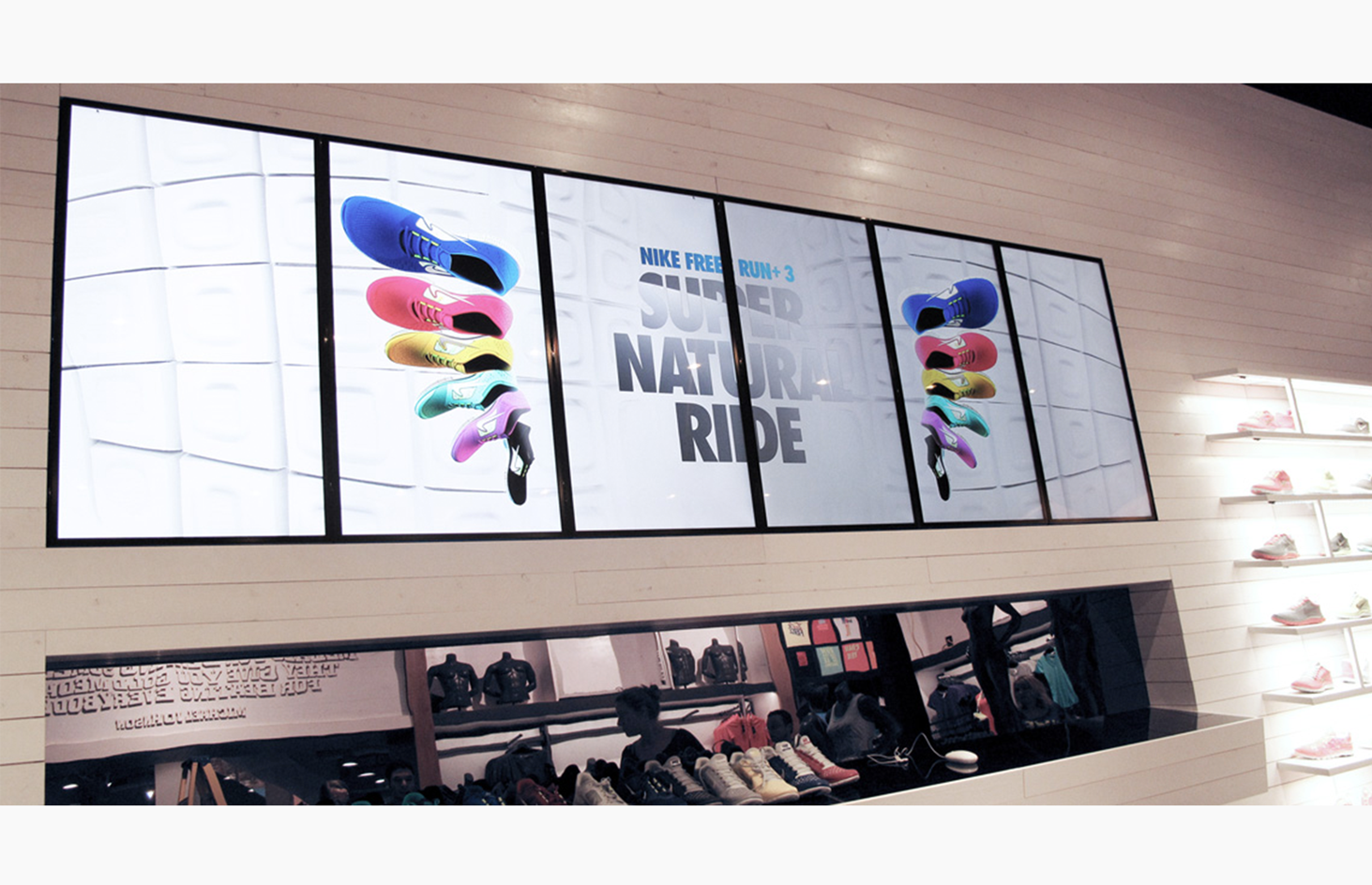
The Nike Free Run+ 3 display at a flagship retail location. A three-panel digital screen shows the shoes cascading in an explosion of color alongside the tagline "SUPER NATURAL RIDE." Below the screen, a glass display case showcases the product lineup. These interactive retail environments combined large-format digital content with physical product displays to create an immersive shopping experience.
Setting up an interactive Nike retail display. Multiple vertical screens glow white during calibration, with a green-screened application visible on one of the monitors. A graphics tablet in the foreground was used for content creation and interface design. This is the behind-the-scenes work that goes into making a retail wall look effortless: displays, sensors, computers, and a lot of cable management.
A Nike interactive retail display running the "Winter's Angry, Fight Back" campaign with a touch-enabled screen and an infrared sensor mounted on top for gesture detection. The hardware stack on the desk below shows what powers these installations: a Mac Mini, keyboard, and a tangle of cables connecting everything. The bubble wrap suggests this was during initial setup and testing at the store location.
A Nike event installation for the Super Bowl, built around the "FAST IS FASTER" campaign. The massive digital display behind shows NFL athletes in action while fans in team jerseys explore the space. These event builds combine large-format screens, real-time content, and interactive elements, all designed to run reliably in a high-traffic, high-energy environment.
The Nike Women Half Marathon social media wall at Lincoln Park, Chicago. A giant digital mosaic of participant social media posts updates in real time, displaying the collective energy of the running community under the "#WERUNDC" hashtag. This kind of live social aggregation was technically challenging at the time: pulling, filtering, and displaying hundreds of posts per minute on large-format screens.
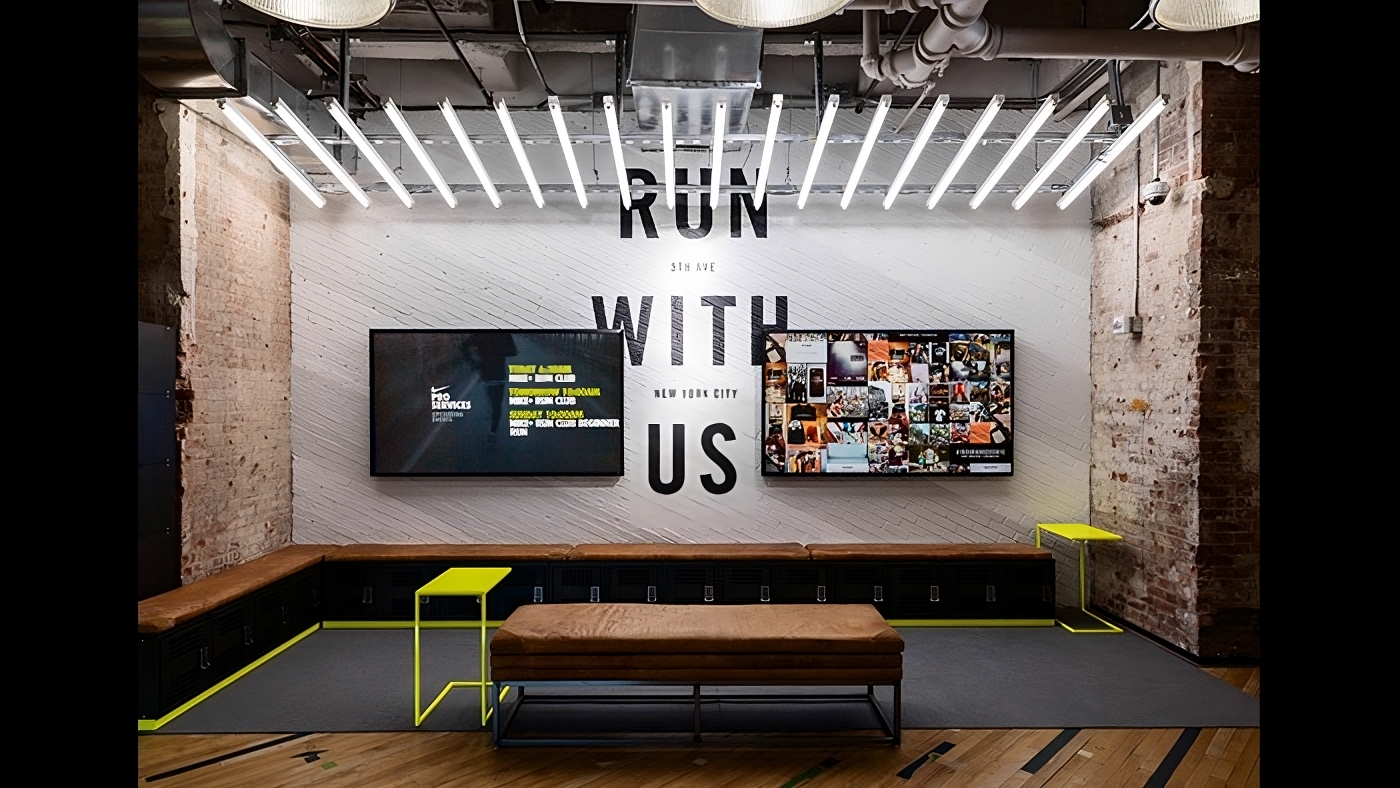
The Nike "RUN WITH US" installation at 5th Avenue, New York City. An industrial brick space converted into a runner community hub, with social media displays on the walls and a wooden seating area below. The exposed brick and tube lighting give it a neighborhood-bar feel rather than a corporate store. The yellow stool is a nice design touch in an otherwise neutral palette.
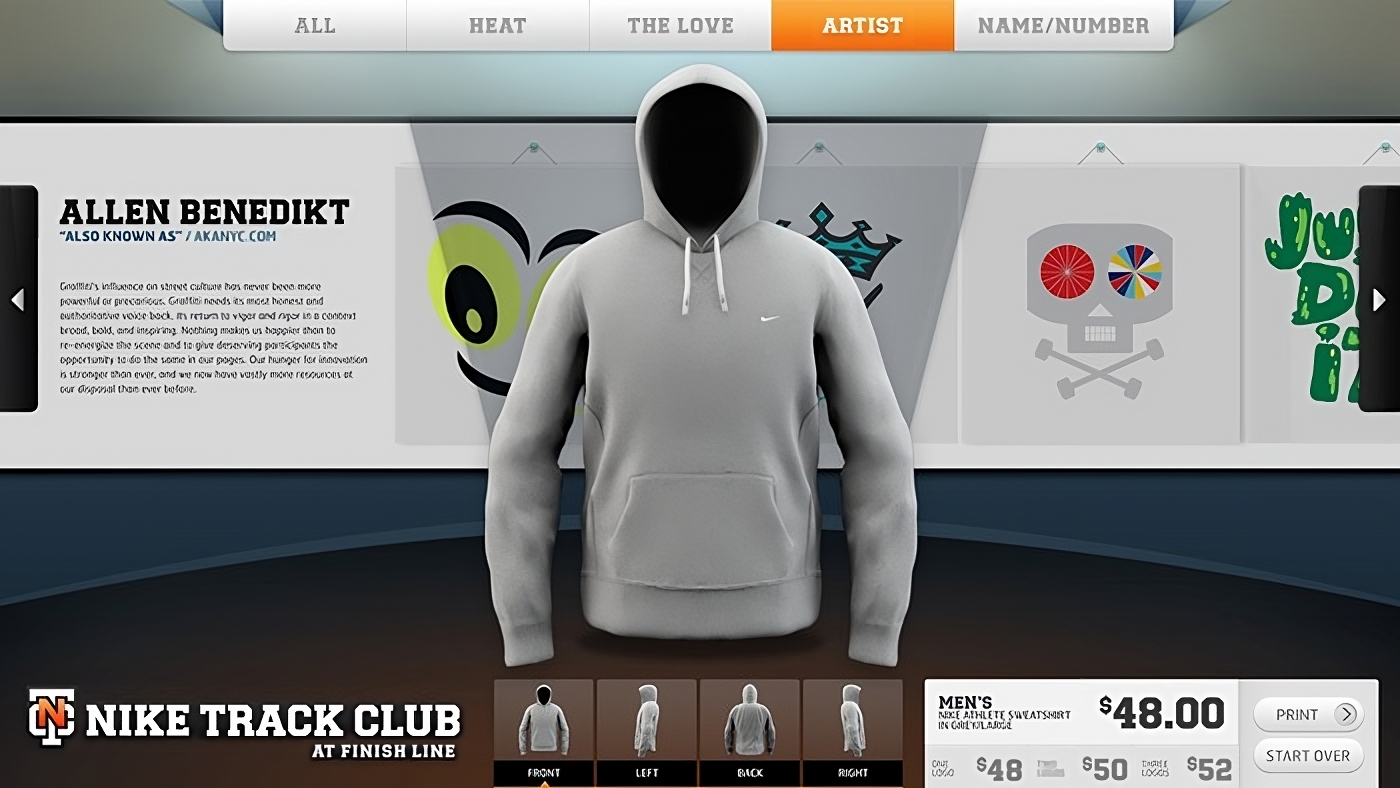
Two views of a Nike retail space. On the left, the full store layout with wooden display shelves, mannequins in athletic wear, and illuminated shoe walls. On the right, a close-up of the interactive computer displays on orange countertops where customers could browse the digital catalog and customize products. The store design deliberately blended physical browsing with digital interaction.
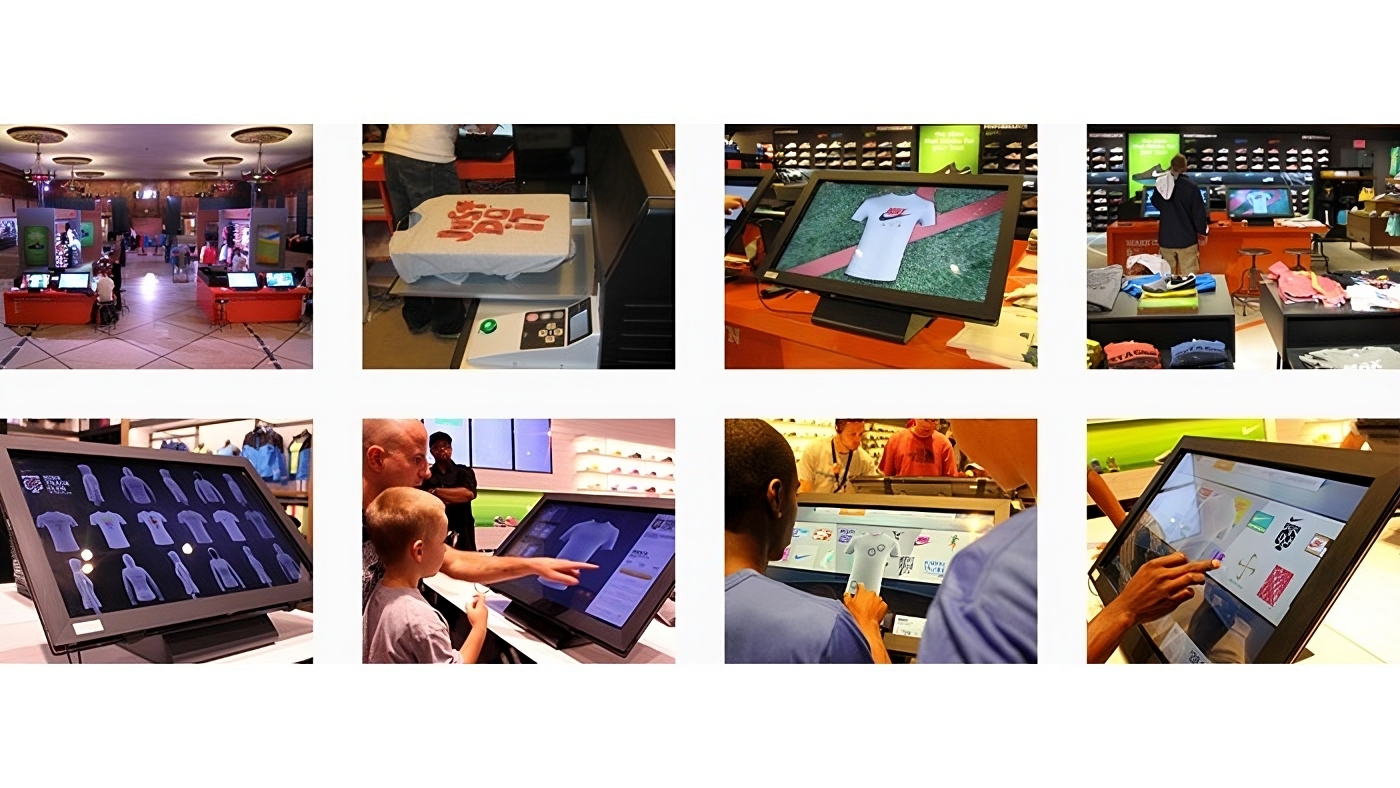
A collage of moments from a Nike retail space showing the full customer journey: an overview of the store layout, a purchase station with branded shopping bag, a touchscreen customization interface (previewing a t-shirt on a virtual grassy field), a customer trying on shoes with a digital display beside them, a digital product catalog in blue, a store associate helping a young boy with the interactive display, a customer designing a custom product, and a sticker selection station. Every touchpoint was designed to blend physical retail with digital personalization.
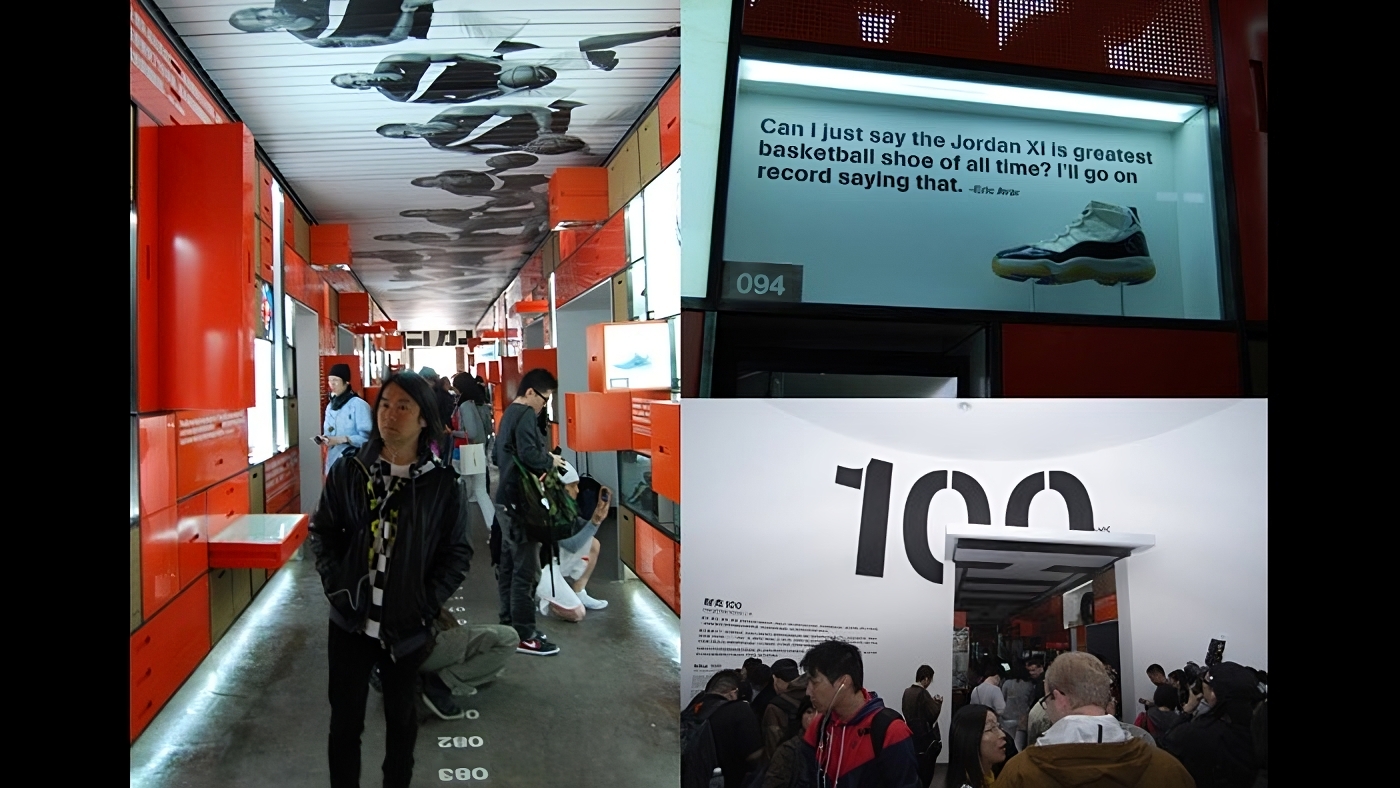
A Jordan brand sneaker exhibition. The left panel shows a corridor with inverted sneaker graphics on the ceiling and red lockers lining the walls. The top right declares the Jordan XI one of the greatest basketball shoes ever made. The bottom right shows a crowd gathering at the "-100" entrance. The red and black color scheme runs throughout, tying the exhibition to the Jordan brand identity. The setup blends sports heritage with sneaker culture.
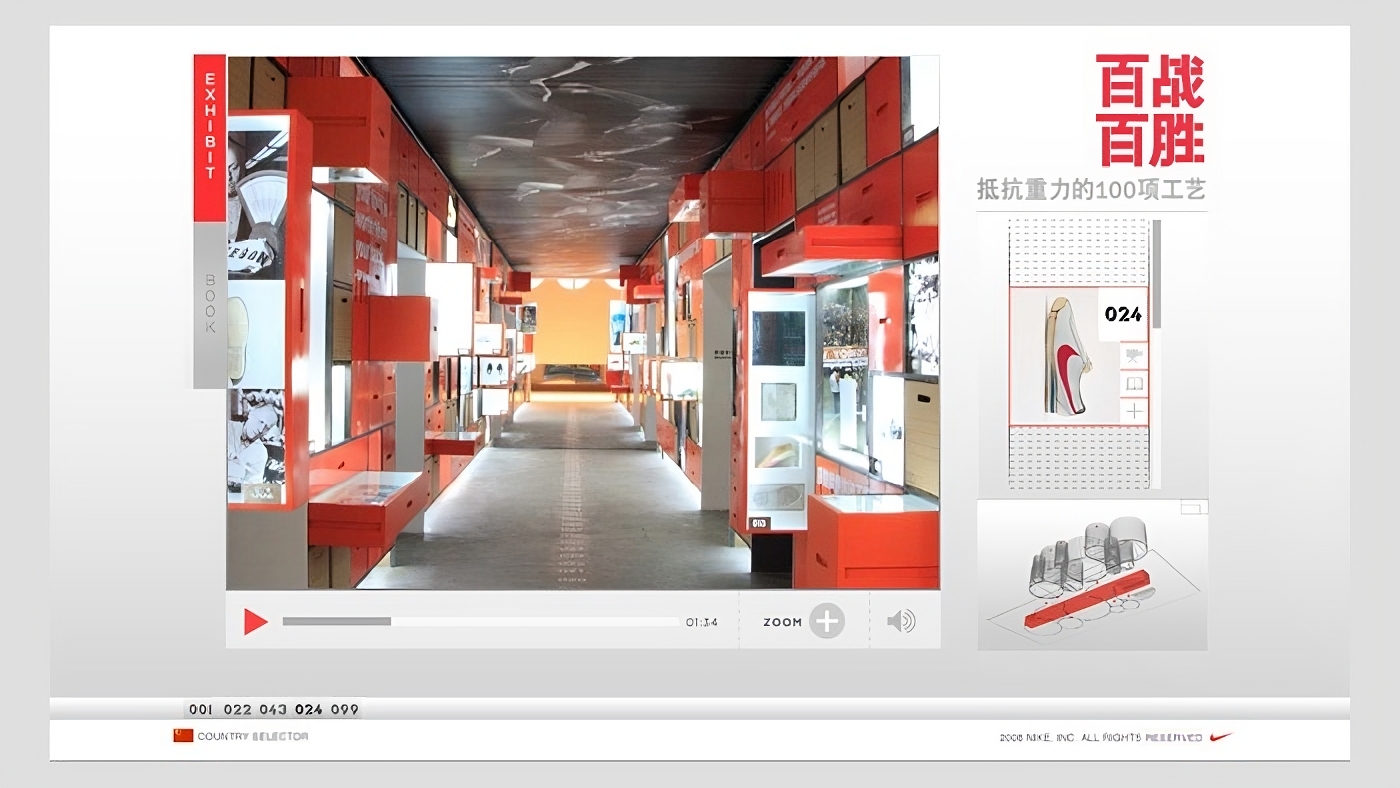
The interactive digital interface for a Nike "One Hundred Years" exhibition. The main screen shows a sleek exhibit hallway with red and orange lockers, with a navigation timeline at the bottom (001 through 099). Chinese characters translate to "One Hundred Years," indicating a centennial retrospective of footwear design. The interface includes zoom controls and audio playback for a virtual tour experience. A design blueprint of a sneaker sole and an illustration of a red high heel (marked '024') suggest the exhibition covered the full breadth of footwear history, not just athletic shoes.
A page from the Nike "One Hundred Years" digital exhibition featuring Bill Bowerman, Nike co-founder and legendary University of Oregon track coach. The interface showcases Bowerman's story: handmaking shoes for his runners using waffles, tin, and rubber, and his obsession with lightweight performance that became foundational to Nike's identity. The monochrome photo collage shows moments from his career alongside personal memorabilia. The same clean, interactive interface from the exhibit continues here, with numbered sections and navigation controls.