SVA MFA IxD
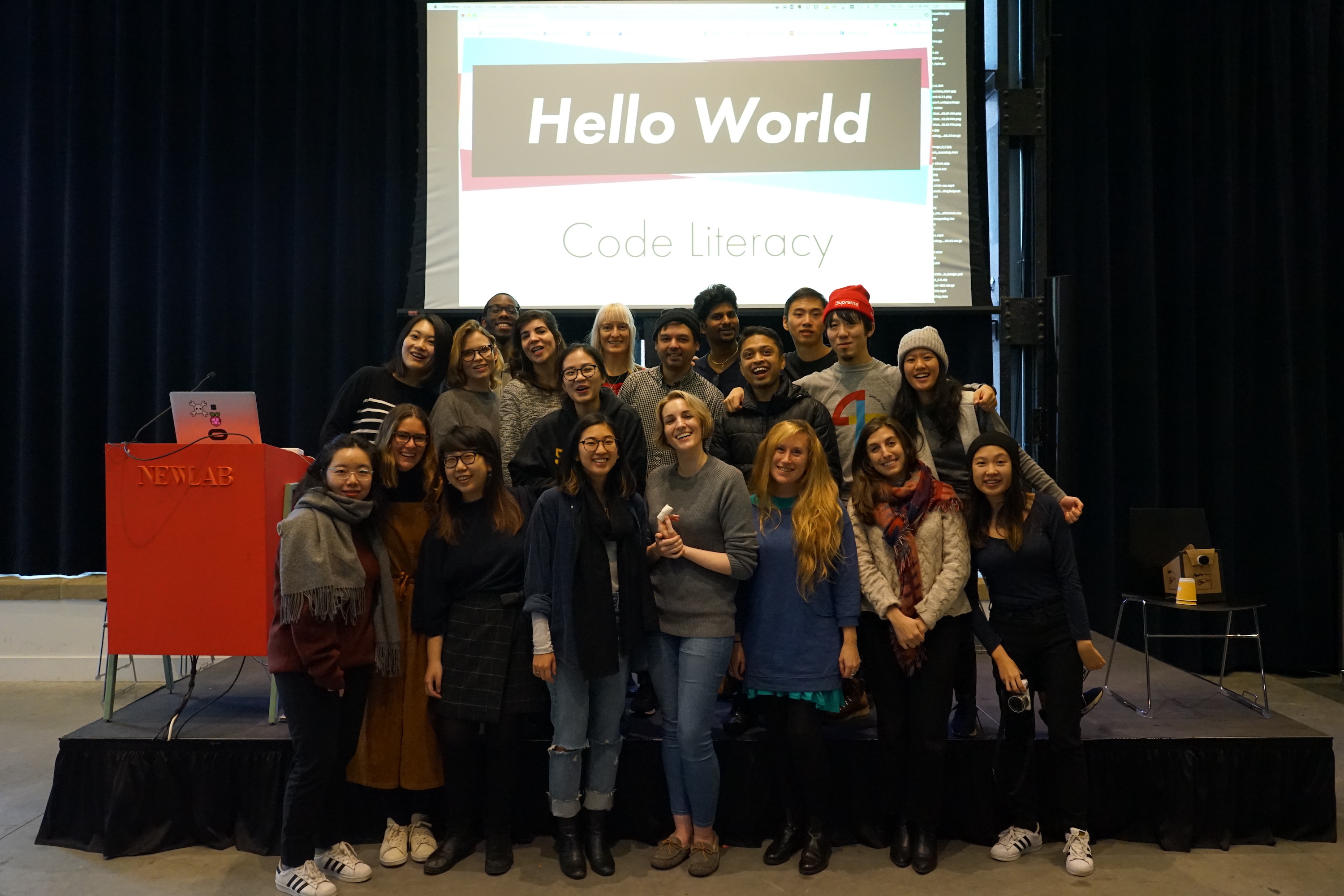
I teach in SVA's MFA program in Interaction Design, where my two courses come at machines from opposite ends. In Smart Objects, students build imaginative, embedded things that invite an emotional connection, with a focus on implicit interaction, the kind of sensing that reads you without being asked. In Logic of Interaction (Hello World), they learn to talk to machines from the ground up in Python, JavaScript, and C.
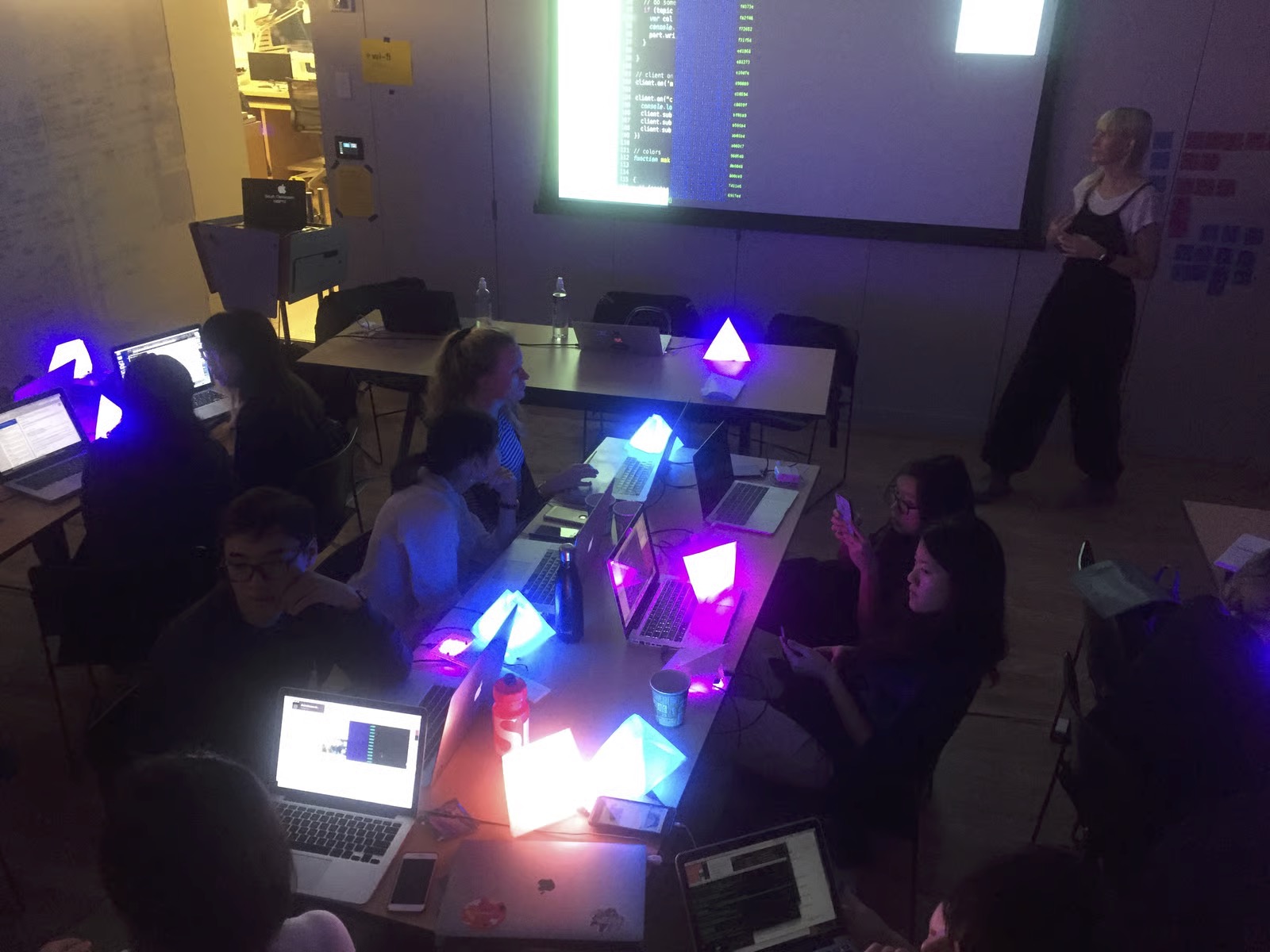
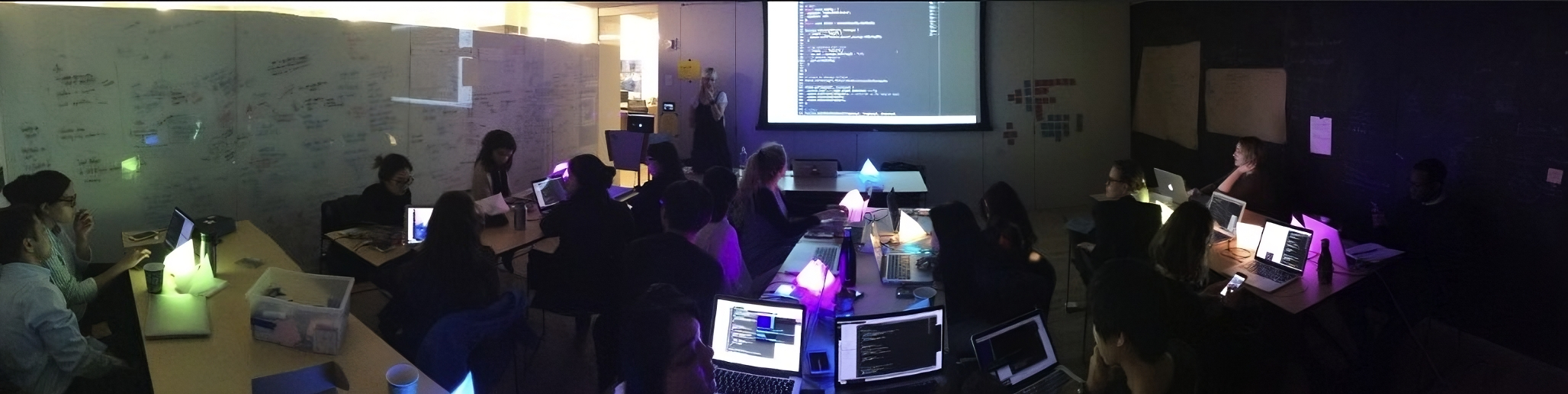
Spring 2026, Smart Objects asked a bigger question: what if the classroom itself were a multi-agent system? Not a room with computers in it, but a room whose computation was distributed across cameras, code, and the people who walk in. Over a semester, thirteen students and two instructors prototyped it. Perception agents sensed the room with V-JEPA and YOLO, reactive agents responded to what they saw, and the people in the room were agents too. I built the class infrastructure and trained the first V-JEPA probe at home before carrying it into class, where we trained the room's own.
The design stance was the point. The obvious build, attendance and identity tracking, is exactly what we steered away from. The room reads posture, not names, more a vibe than a roster, and the tools that watch people are opt-in only. Same instinct as the rest of my work: sensing in service of the people being sensed, never against them. The whole session, told room by room, is at smartobjects.design.
Image descriptions generated by Claude Opus 4.6
These image descriptions were written by Claude. I provided my own code, project proposals, and notes as input so the descriptions could explain what you're actually seeing.