Possible Futures

I teach in a graduate interaction design program, and over the last couple of years I have watched my students grow anxious about their futures. The job market is being reshaped by AI, and much of the usual advice no longer fits. So I started building Possible Futures, a tool to help people navigate their careers through all this change.

You begin by writing about yourself and your goals. Then you can paste in a job posting and score it against your own compass, the things you actually value, instead of a hiring algorithm. You keep track of how each role lands, and the tool is built to reveal the work you put in rather than let a screener bury it.

This tool borrows from foresight practice. A job search is really a question about the future, and this is a way to approach it with intention and authenticity. The focus right now is on the individual, but job seekers make up half of the job market. My hope is that together as a community we start to see how work is changing and how to plan for what comes next.

You can walk through the whole tool, page by page, at possible-futures.life/tour. And there is a full design case study of how it was built: Possible Futures, a case study.

Show image descriptions

These image descriptions were written by Claude. I provided my own code, project proposals, and notes as input so the descriptions could explain what you're actually seeing.

Possible Futures rubric radar cycling through sample roles
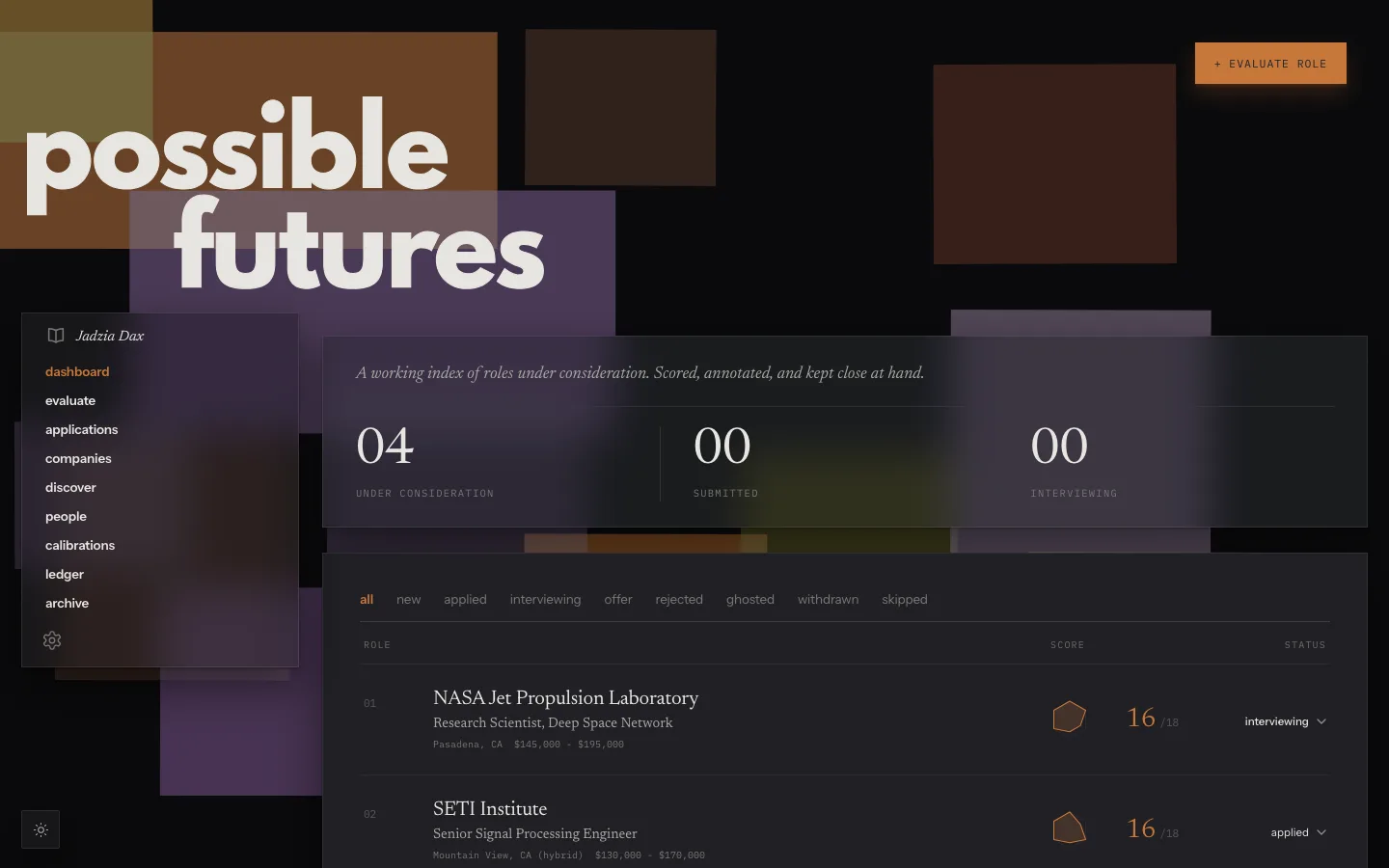
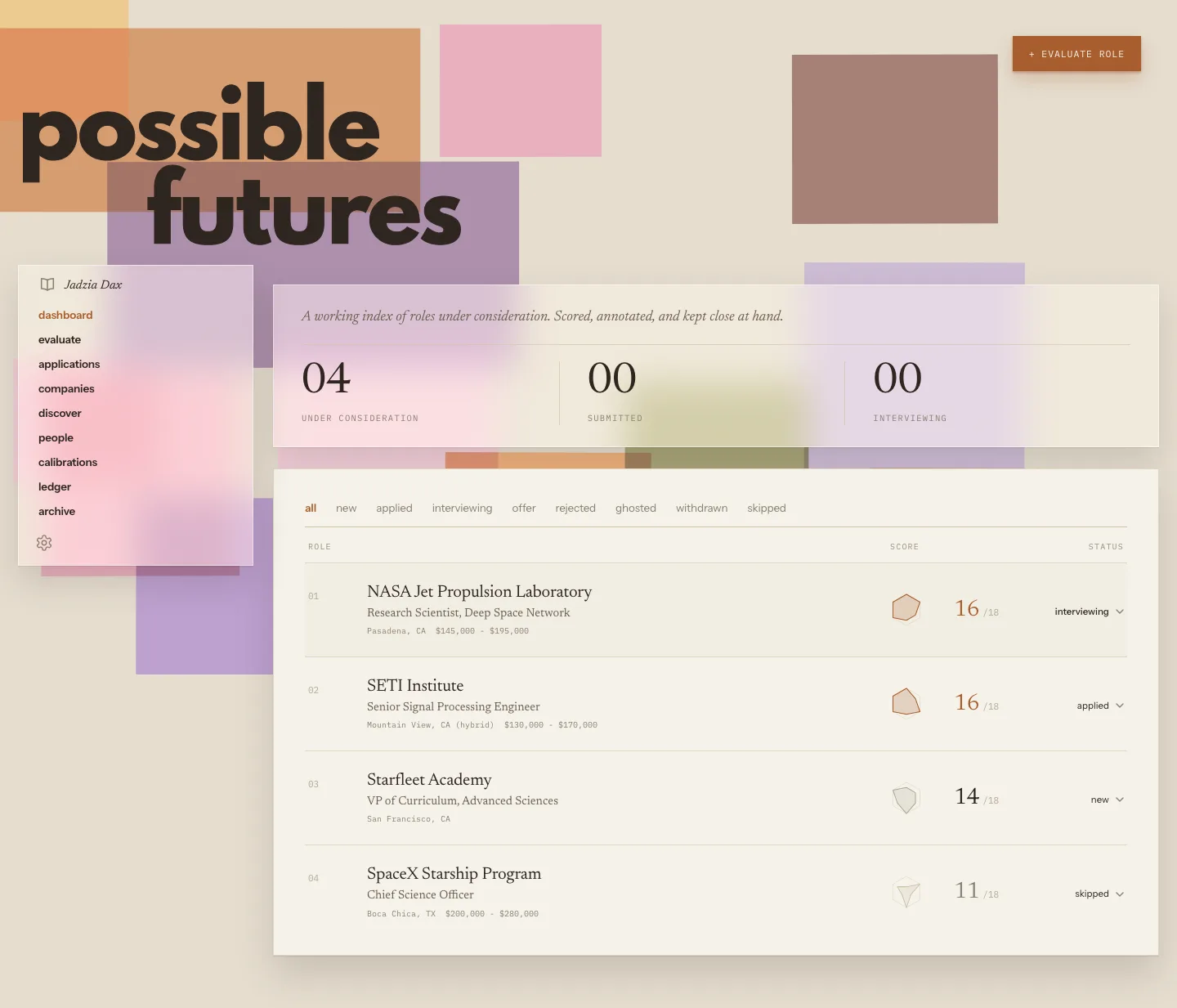
Possible Futures dashboard, an editorial index of roles under consideration
No items found.

The scoring rubric as a radar chart, cycling through sample roles. Six dimensions: Want, Can, Grow, Pay, Team, and Impact, each scored out of three with the reasoning shown beside it. The demo data follows Jadzia Dax through postings at NASA JPL, the SETI Institute, Starfleet Academy, and SpaceX, because sample data should be at least a little fun. The shape tells you more than the total: a role can score well overall and still be the wrong shape for you.

The dashboard, a working catalog of every role under consideration. Each entry shows its score against your compass, its status in the pipeline, and which resume version it uses. The colored field behind everything is the app's desk: the color stays on the desk, and the work sits on paper surfaces above it, a nod to Josef Albers. The tallies at the top count what is under consideration, submitted, and interviewing.

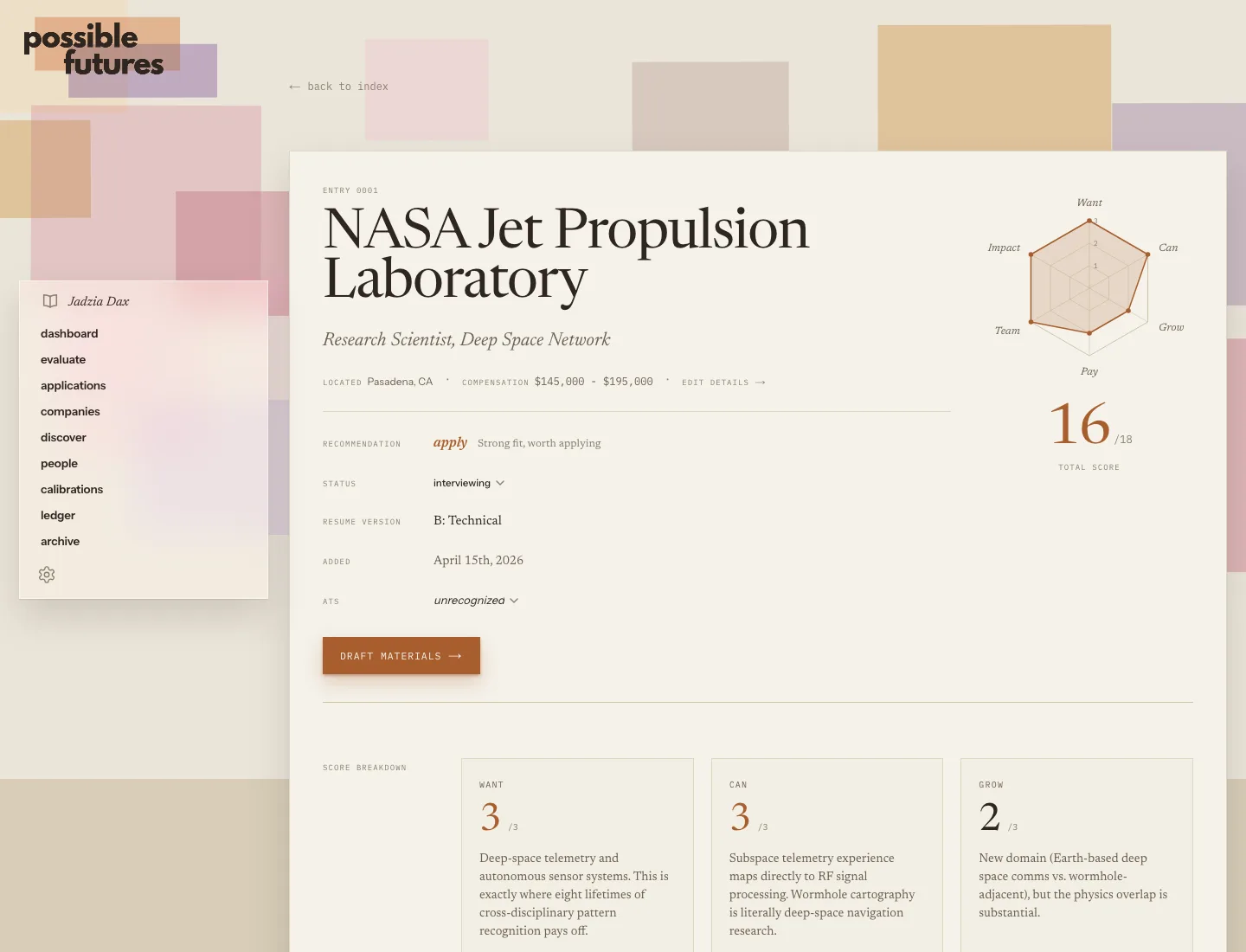
A scored role: the rubric radar, total score, and the reasoning per dimension
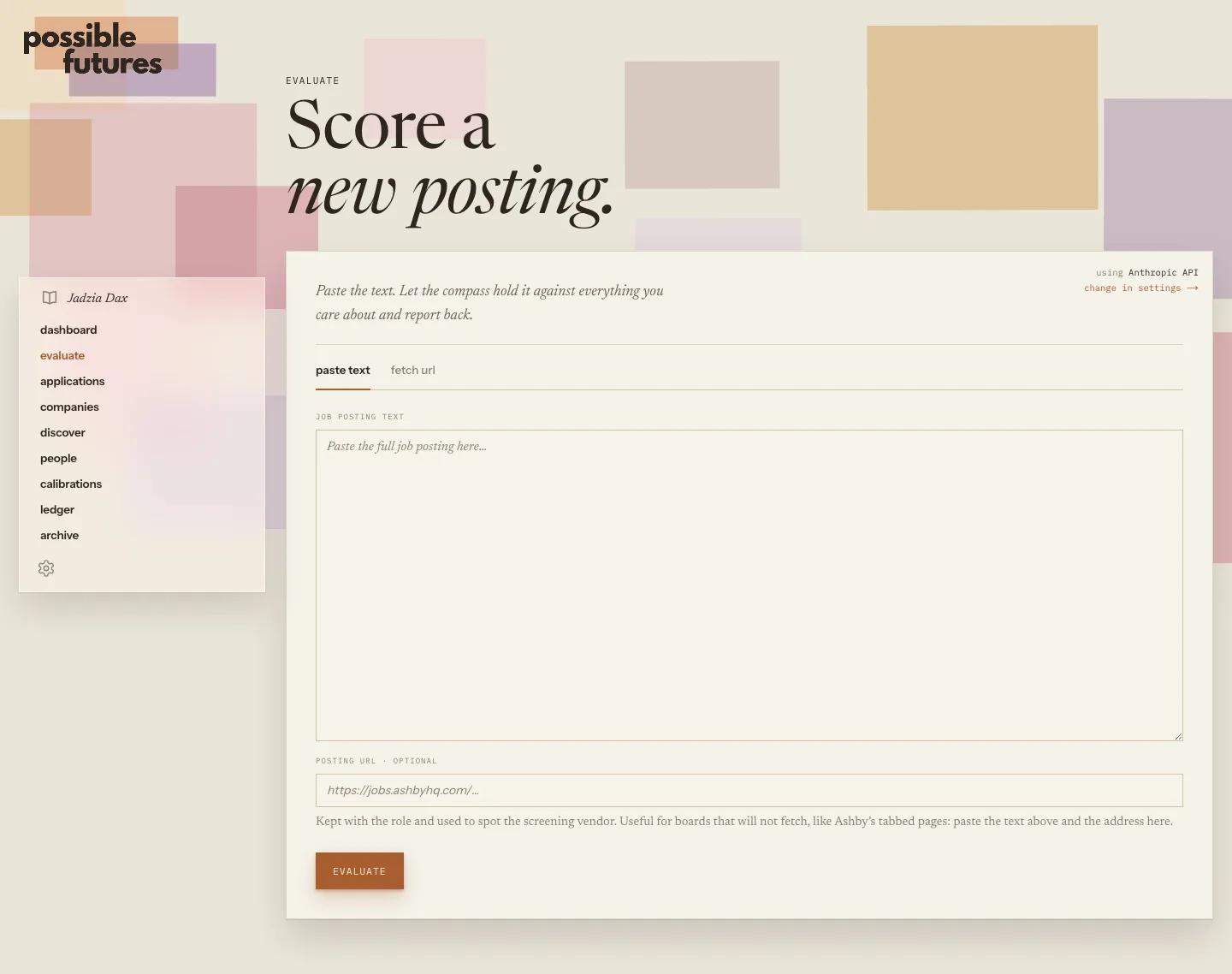
Evaluating a job posting against your own compass
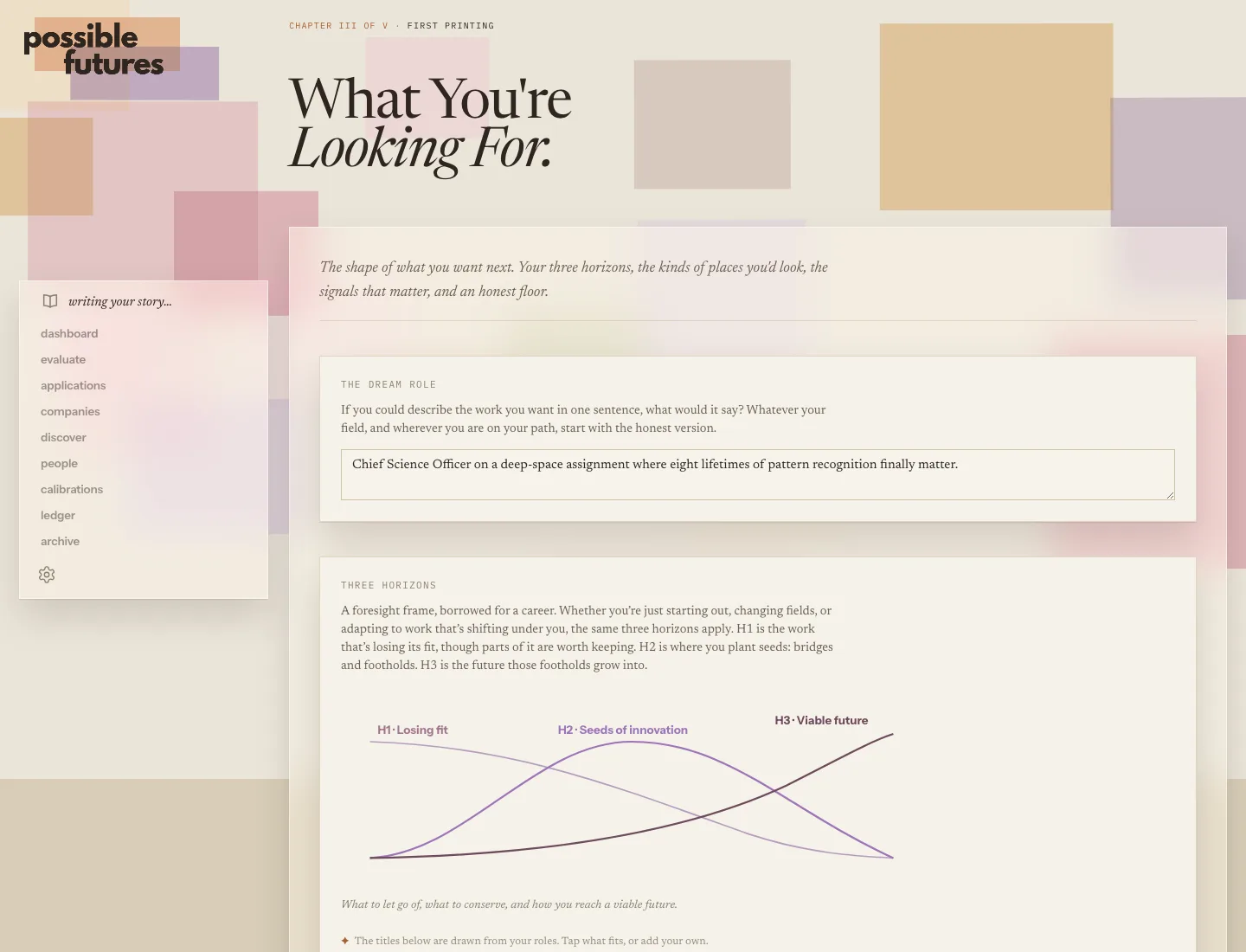
The intake, mapping where your work is heading across three horizons
Discovering roles that fit your compass
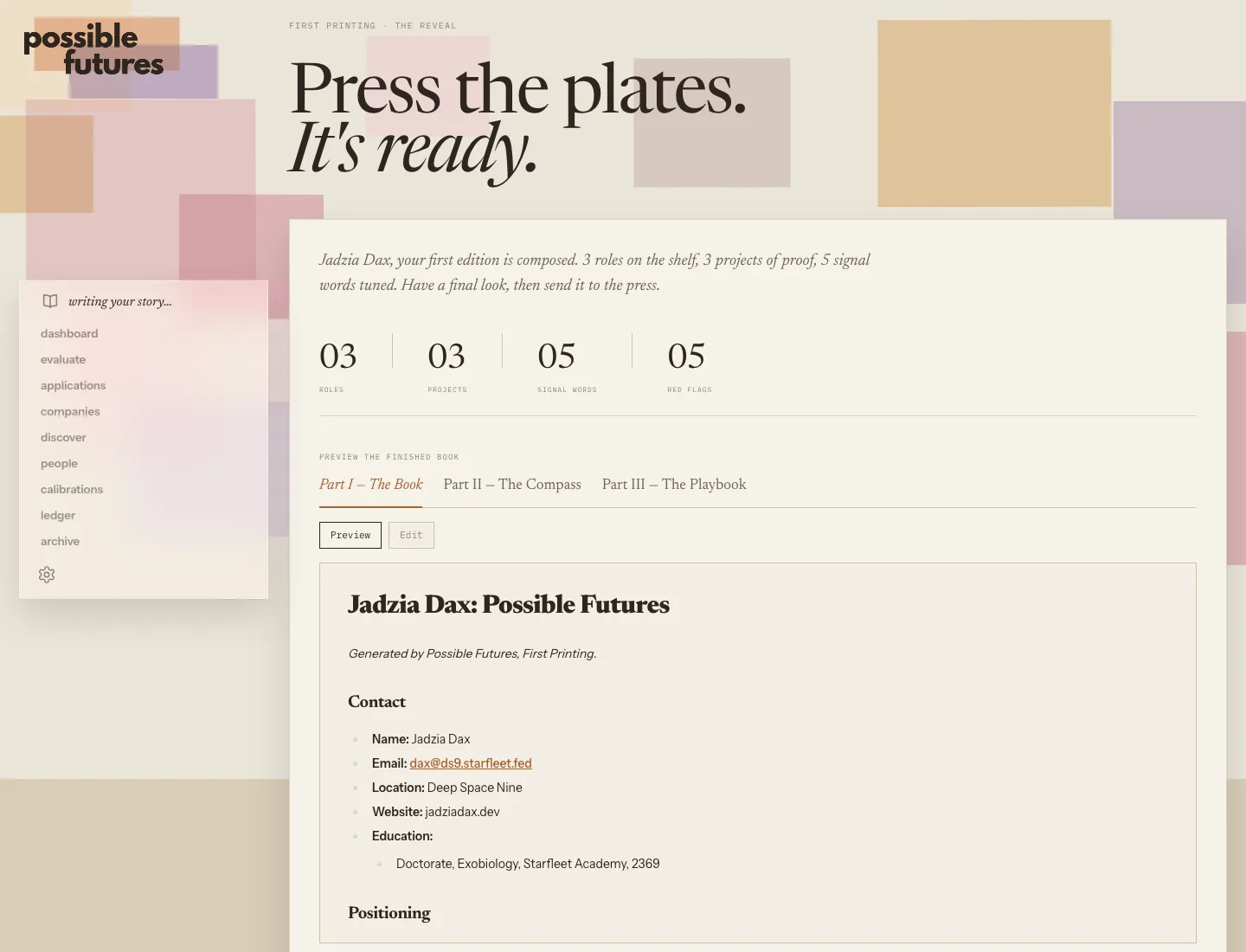
Publishing your Book, Compass, and Playbook
Possible Futures dashboard in dark mode
No items found.

The full scoring breakdown for a single role, a Research Scientist posting at NASA JPL from the demo data. The radar shows the shape of the fit, the total sits at 16 of 18, and every dimension gets its own card with the reasoning written out. Nothing is hidden: if you disagree with a score you can override it, and your corrections accumulate into a record of your own judgment that the tool learns from.

The evaluate page, where a job posting gets scored. Paste the text or fetch a URL, and the posting is read against your compass: the values, signal words, and constraints you wrote during the intake. Scoring takes fifteen to thirty seconds and returns the six-dimension breakdown with the reasoning shown, not just a number.

The intake, where you write about yourself before the tool does anything else. This is deliberate: everything downstream, from scoring to cover letters, runs on the voice you use here, so the app asks you to write it yourself rather than importing a profile and calling it you. Five chapters cover your history, what you are looking for, your guardrails, and the work you are proud of.

The discover page. Claude reads your compass and suggests companies likely to be hiring roles that fit, and every suggestion is verified live against the company's hiring system before it appears, so the list shows real openings rather than guesses. Track the ones you like, skip the ones you don't, and skipped companies stay out of future searches.

The reveal at the end of the intake: your writing is compiled into three plain markdown documents. The Book holds your history, the Compass holds your scoring rubric, and the Playbook holds your writing rules. They stay editable by hand, and every score and draft the tool produces is reasoned from them, so changing a rule changes the next result immediately.

Dark mode, of course.